

The King Flees
Regifugium: on the Limitations of Power

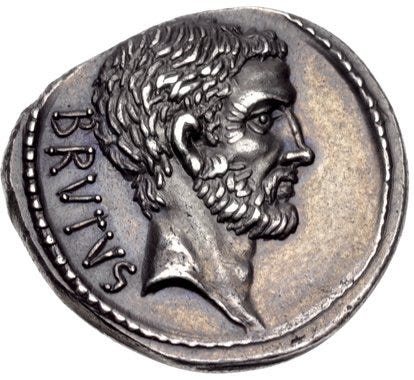
The Roman Republic was established on a firm rejection of kingship. Tradition has it that the last king of Rome, Tarquinius Superbus (Tarquin the Arrogant, usually translated as “Proud”) was a ruthless tyrant who abused his power to oppress the people and killed many Roman citizens in the process. After his son, Sextus, raped Lucretia, a married woman of exemplary virtue, she killed herself. This was the last straw. Her husband and kinsmen started a revolt and ousted the reckless king in 509/508 BCE.
Ovid connects this story with the festival called the Regifugium, which took place on 24 February every year. The Latin name means the flight of the king, but ancient authors were already puzzled as to its significance. After all it was not a simple commemoration of Tarquin running away from Rome. He was not even in Rome when news reached him that he was deposed. The myth of the last king says he was encamped with his army besieging an enemy city.
Plutarch writes that the strange ritual relates to the priest called the rex sacrorum (literally the king of the sacred rites) whom the Romans put in charge of rituals that had been performed by the king after they abolished the monarchy. Romans were so scrupulous in their religious rituals that they maintained a nominal office with the title of “king” just to make sure certain rites were still duly performed by the rex, as was the ancient custom. But they completely stripped this function of all political power to make sure no single man would rise to tyranny again. The rex sacrorum was not allowed to hold political office or even set foot at the place where assemblies were held, the Comitium in the Roman Forum.
Except he did once or even twice a year.1 Little is known about the ritual itself. The king would come to the Comitium, perform the annual sacrifice and then quickly escape from a place where he was not normally allowed. The fact that this day was an exception to the rule is significant. It shows that the festival is a rite of reversal, which usually take place in the liminal period of the year. As I wrote in my January post, both January and February belonged to this period of transition and for that reason were not included in the earliest Roman calendar. The Lupercalia was the most important festival in this period.
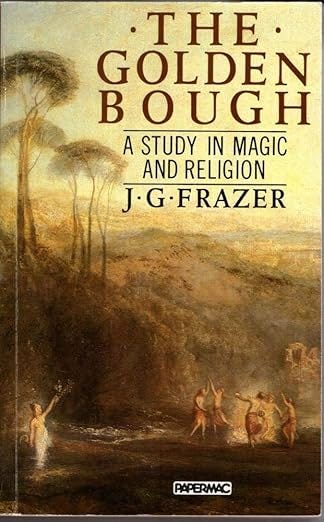
James George Frazer treated the Regifugium within his broader theory of “sacred kingship,” famously articulated in The Golden Bough. He interpreted the flight of the king as a vestige of a much older ritual pattern in which a divine or semi-divine ruler was periodically removed (and often violently) to renew the vitality of the community and the fertility of the land. For Frazer, the Roman rex sacrorum represented a diminished survival of this archaic institution: the political king had disappeared, but the ritual structure remembering his symbolic elimination endured. In keeping with his comparative method, Frazer saw the Regifugium not as a historical commemoration but as a fossilized remnant of a widespread pattern of ritual regicide or the ceremonial expulsion of a sacred king whose power had become dangerous or exhausted.
Frazer’s Golden Bough was a monumental magnum opus that influenced a whole generation of scholars and inspired so many literary works. However, much of his grand theory about the slave king who embodies the rebirth of vegetation has been disproved. Aside from his imperialist and condescending bias, Frazer often misconstrues primary sources and ignores differences in order to make them fit his overarching theory.
Roman kings were not simply tyrants. The trope of the tyrannical king developed as a myth in order to prevent accumulation of power. The regal period of early Rome (eight to sixth century BCE) is shrouded in mystery as we have no direct sources from this time, only later narratives subject to the distortions of mythistory. But this doesn’t mean that it holds no value. Myths are pregnant with meaning and indicate how people envisage their world and their values.
The three last kings of Rome (Tarquinius Priscus, Servius Tullius and Tarquinius Superbus) were said to be foreigners, Etruscans. Tradition says that they usurped more than their share of power, which shows that the role was probably envisaged as limited in the first place. The king was not a hereditary title in Rome. He had to be elected by the Senate and confirmed by the people’s assembly, called Comitia Curiata. Christopher J. Smith has recently proposed the idea that Roman myths about the good kings (Numa, Romulus) and bad kings (the Tarquins) arose in the context of Rome’s conquest of its neighbours in Latium in the fourth century BCE. This would mean that the myths of Roman kings we find in the historical sources are Republican mythic examples of the dangers inherent in having one man seize all power.
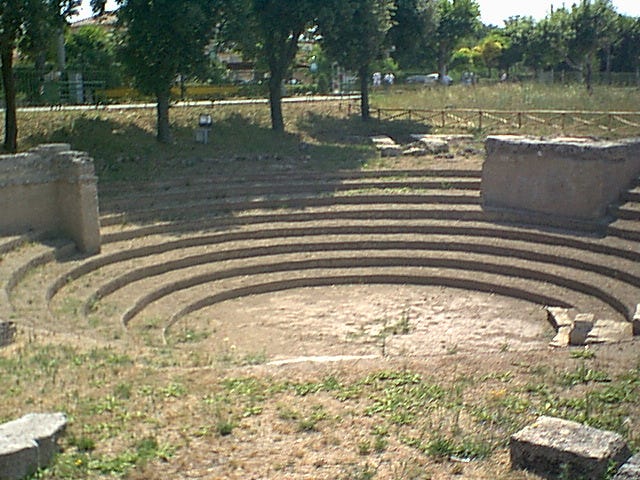
It is impossible to say how old the ritual of the Regifugium is. But given Roman ideas about kingship it was probably designed to restrict the power of the king and remind everyone of their proper place in the unwritten constitution of Rome. In the liminal period at the end of the year the king had to sacrifice in the place of the people’s assembly to show his allegiance to the gods and to the constitution that limits his role. The reversal that allowed him to enter the Comitium only to quickly leave it emphasized the limitations of his power in the same way that the reversal of roles between masters and slaves at the Saturnalia ultimately reinforced power relations once the holiday was over. It was a warning that kings are not allowed to rise to power in Rome, one that would-be tyrants would do well to observe.2
The Regifugium therefore reveals something fundamental about the Roman political system. It was not simply a nostalgic glance backward at the fall of Tarquin, nor a fossilized remnant of some prehistoric rite of regicide, as Frazer imagined. Rather, it staged the careful containment of power. By allowing the rex sacrorum to enter the Comitium only to depart it immediately, the ritual dramatized both the necessity and the danger of kingship. Authority had to exist, but it could never remain. The king could sacrifice on behalf of the community, yet he could not stay among the citizens as their ruler. In this sense, the Regifugium embodied the Roman conviction that power must always be bounded by custom, law, and divine oversight. The flight of the king was an annual reminder that sovereignty in Rome was provisional, conditional, and ultimately subordinate to the will of the gods.
The ritual calendar repeats the formula QRCF=quando rex comitiavit fas (when the king sacrificed in the Comitium, business is allowed) also on 24 May.
The system of magistracies (highest state officials) in the Roman Republic was deliberately designed to limit the power of individuals. Two consuls shared the highest office for one year only when others took their place. Consuls, praetors and censors were elected by the people’s assembly rather than the Senate. See for example A. Lintott (1999). The Constitution of the Roman Republic. Oxford University Press and H. Mouritsen (2017). Politics in the Roman Republic. Cambridge University Press.